Cash in on the season: Plant essential nectar flowers for pollinators
Tom Oder
September 14, 2026 · Atlanta & Southeast Gardening
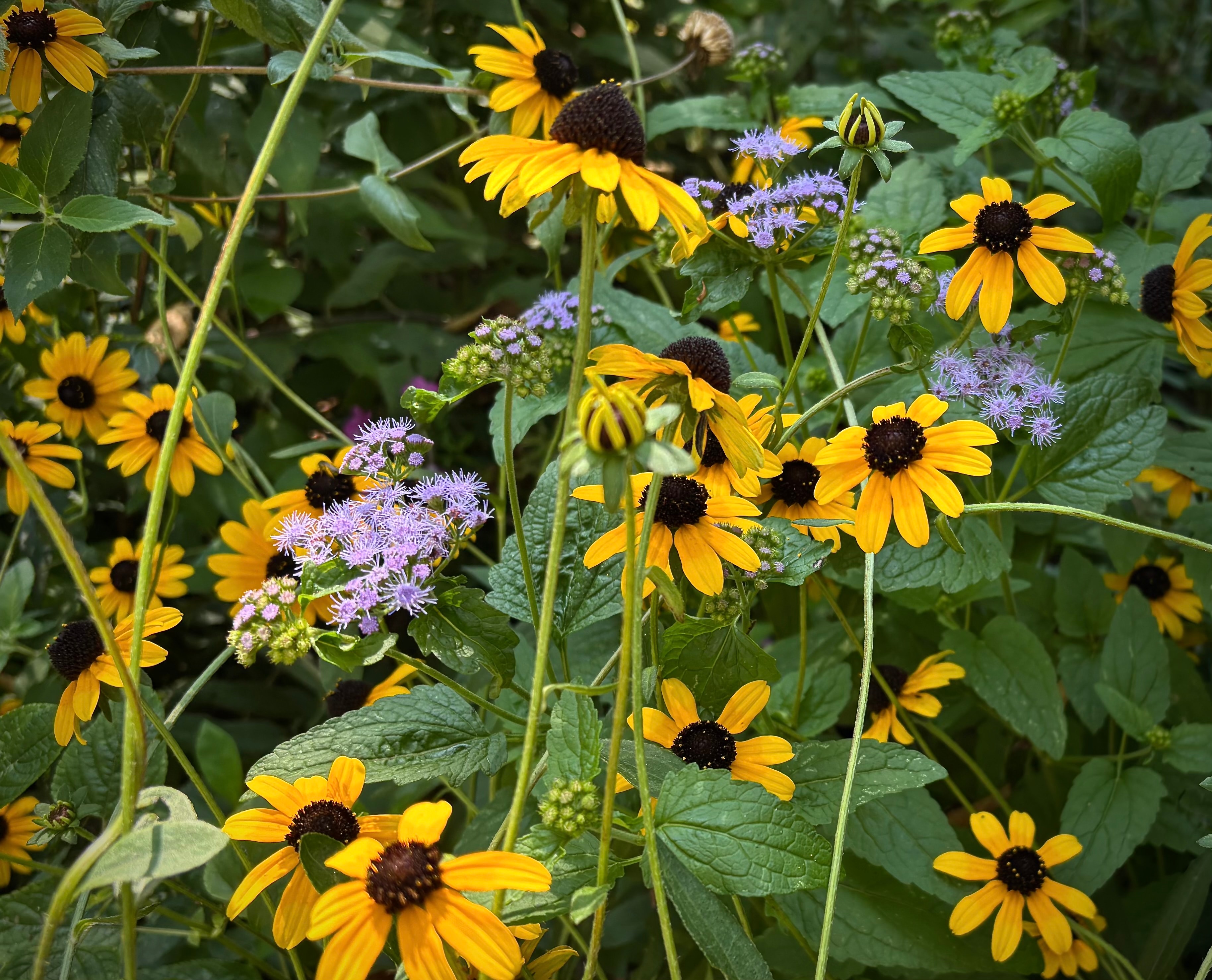
Blue mist flower (Conoclinium coelestinum) stands out among Black-eyed Susan (Rudbeckia hirta) in the sun portion of the author's garden. Both bloom into October. Black-eyed Susan feeds bees and then goldfinches, among other pollinators. Blue mist flower is a magnet for monarch butterflies. (Photo: Tom Oder)
As last week's blog pointed out, monarch butterflies have begun their epic fall migration in the upper Midwest and their pre-migration migration in the Southeast. But while these iconic butterflies are stealing the spotlight now, they aren't the only seasonal travelers on the move or overwintering insects fueling up for the changing seasons.
Hummingbirds heading to Mexico and Central America, common buckeye butterflies, queen bumblebees and various native solitary bees all depend heavily on home gardens in autumn. They need vital nectar to build the energy reserves required to fuel long migrations or survive winter hibernation.
Because the Southeast features mild late-season temperatures, these migrating travelers and winter residents remain active well into October and November. Their message to gardeners is clear: Fall is the true golden hour to plant Southeastern native plants in home gardens. And depending on how you define the start of fall, it has either arrived (meteorologists say it starts Sept. 1, culturally it arrives with Labor Day) or is fast approaching (astronomically, the first official day of autumn in the Northern Hemisphere is the autumnal equinox, which will be on Tuesday, September 22, at 8:04 P.M. EDT).
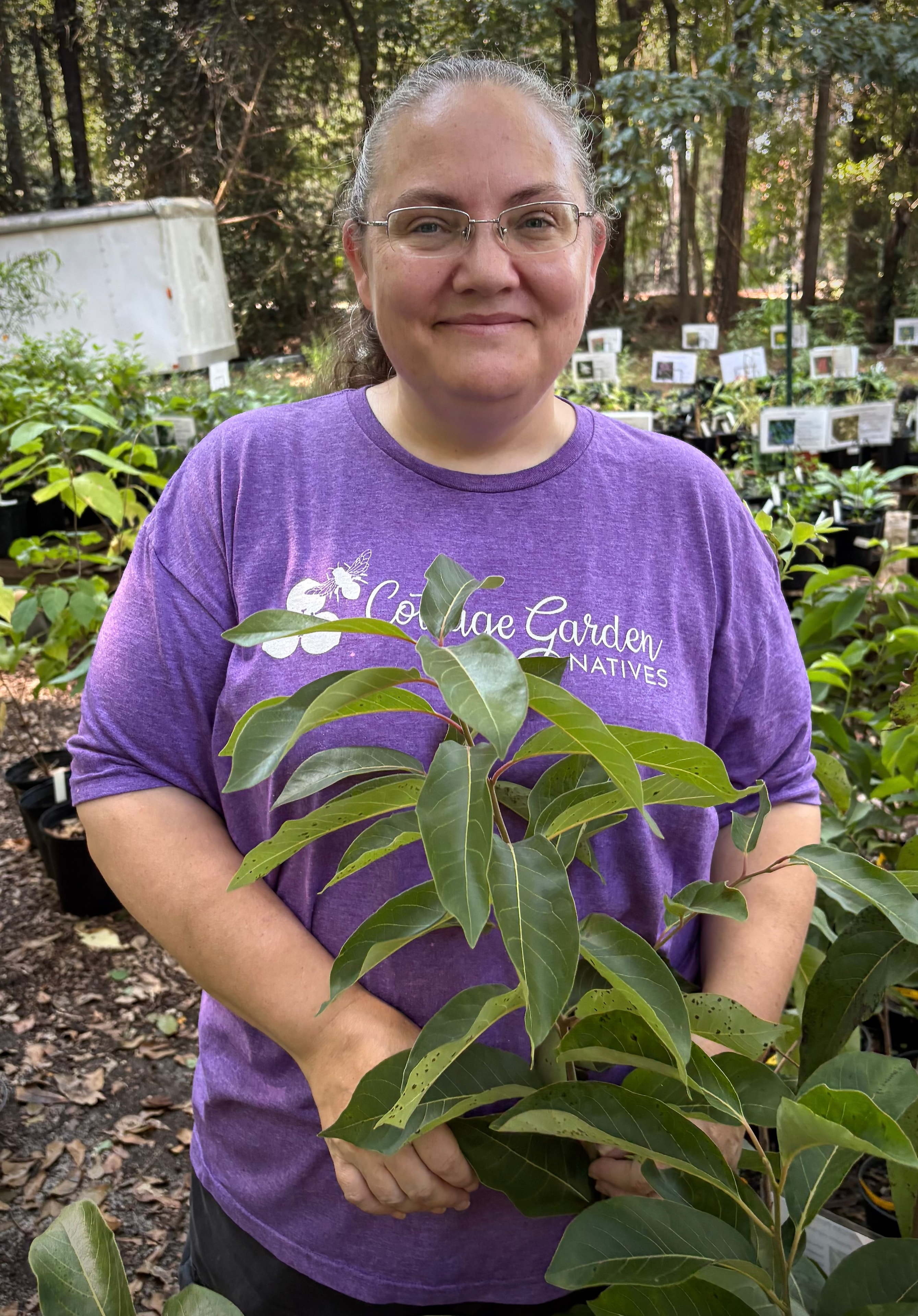
Laura Sultan, owner of Cottage Garden Natives, with an American persimmon (Diospyros virginiana). The nursery offers a wide variety of natives, all beautifully grown. (Photo: Tom Oder)
"A succession of asters and goldenrods should be a staple of any fall butterfly garden," points out Laura Sultan, owner of Cottage Garden Natives in Lithonia, Georgia. Of course, she adds, there are numerous other fall-blooming native plants that are crucial to providing nectar for pollinators. As an example, she says, "I've found that monarch butterflies are particularly fond of blue mist flower (Conoclinium coelestinum) in my garden as they migrate south."
Butterflies aren't the only travelers that get in on the home garden action. "Migratory birds depend on native seeds and fleshy fruits to fuel up for their journey south, and research suggests they prefer more nutritious native fruits over non-native ones," adds Sultan. "As for hummingbirds, they gorge on insects and nectar from native flowers like Cardinal flower (Lobelia cardinalis), trumpet creeper (Campsis radicans) and coral honeysuckle (Lonicera sempervirens) to sustain their long flights."
The bottom line for Southern gardeners is clear: Our autumn landscapes hold immense ecological power. By prioritizing native perennials, beginning with the five generously described by Heather Alley at the State Botanical Garden at UGA, you can create a lasting, low-maintenance habitat that will reward both your eye and local pollinators for years to come. Let's make this autumn golden!
🛠️ Ready to plant? Explore free fall gardening tools
Don't let your autumn inspiration fade! I have built a suite of free, hyper-local digital tools on my site to help you transform your yard into a premier pollinator refuge:
1
Fall native plant sales calendar: Tracking named varieties can be tough, but you don't have to hunt alone. Click here to check our real-time regional calendar featuring upcoming fall native plant society sales and specialized nursery pop-ups across the Southeast.
2
Southeastern native plant nursery directory: Looking for local growers who stock authentic, regional genetics? Visit our curated Resources Page to find verified contact information and directions for dedicated native nurseries near you.
3
Free toolkit: Scroll down to the footer of our Homepage to unlock our free gardening estimators, soil-planning guides, and seasonal checklists designed specifically for Southern zones.